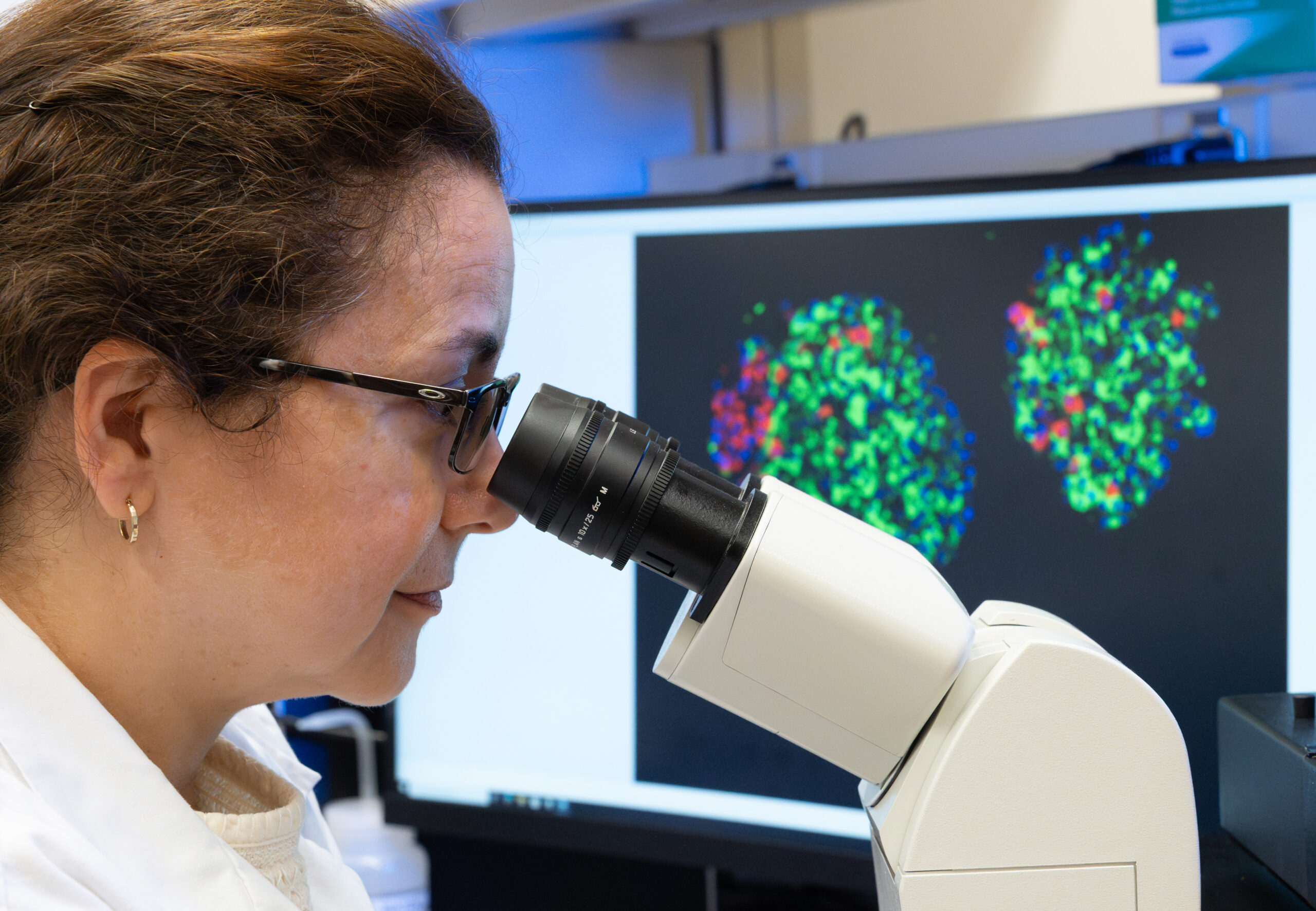
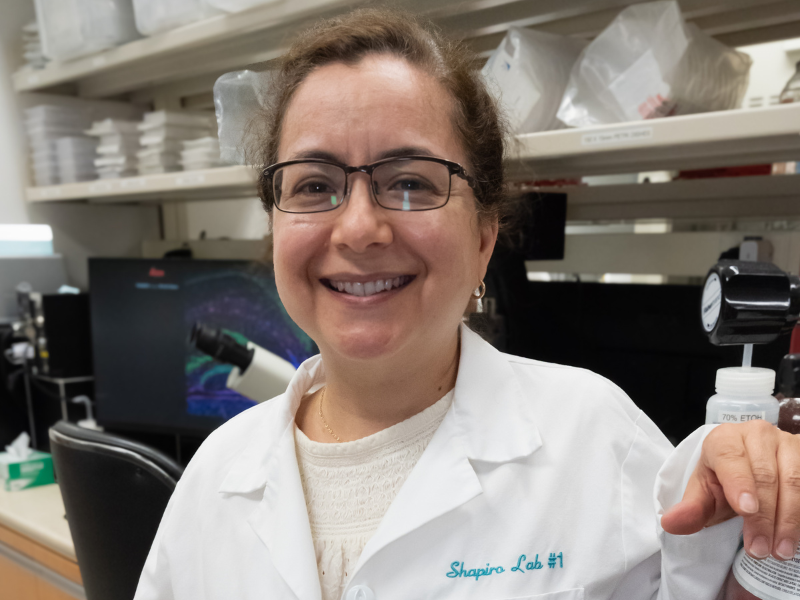
This International Women’s Day, DRIFCan is highlighting another impressive woman in science: Haide Razavy. Haide is a researcher on Dr. Shapiro’s team at the Alberta Diabetes Institute who is helping move stem cell research forward in the search for a cure for Type 1 diabetes.
Following the questions
Haide’s path into science began with a love of questions.
“When I was a child, I loved detective stories. I used to pretend to be a girl detective trying to find out reasons for why things happened.”
That curiosity stayed with Haide as she grew older. She was drawn to problem-solving and investigation, and for a time imagined a future as an investigative reporter. Everything shifted when she was introduced to genetics in high school.
“Upon my first exposure to genetics in high school, I realized that this was one field of biology that dealt with a lot of problem-solving, and I was hooked.”
She was fascinated by the kinds of questions genetics could answer—questions she had always wondered about.
“Why do children look similar to their parents, but not completely the same? What decides the traits that children inherit from their parents?”
That curiosity ultimately led her into science and into a career dedicated to understanding biology at its most fundamental level.
Motivated by what’s still unknown
Before joining Dr. Shapiro’s team five years ago, Haide worked in cancer, immunology, and prenatal research. While progress has been made across all of these fields, she’s motivated by how much remains unanswered.
“What motivates me is the fact that there is so much we still don’t know about biology and medicine, and that there are many sick people who need a cure.”
Haide believes stem cell therapy represents what’s next in medicine and what’s possible for people living with diabetes.
“I feel like stem cell therapy (what we are working on in the Shapiro Lab) is the future of medicine. I believe what we are working on will help the people who are battling diabetes every day.”
Making the cure accessible to all
Scientific breakthroughs only matter if people can access them. Haide emphasizes that cost is a real challenge in diabetes research, but also worries about equity and who will be able to benefit from new therapies.
“I want this technology to be available to those who need it regardless of their financial situation. I hope that as more work is done, efficiency will lead to lower costs.”
This International Women’s Day, we celebrate women like Haide Razavy and Rena Pawlick, who are bringing us closer to a cure for Type 1 diabetes.
DRIFCan provides direct funding to Dr. Shapiro’s team so they can access the resources they need when they need them, and get us closer to a cure for Type 1 diabetes. Learn more at drifcan.com/research.